Skip to content
SEALGUARD
SERIES 01 / 0805 product lines

Gaskets

Engineered flange gaskets — from resilient spiral-wound to chemically inert PTFE — that seal bolted joints leak-free across the full temperature and pressure envelope.

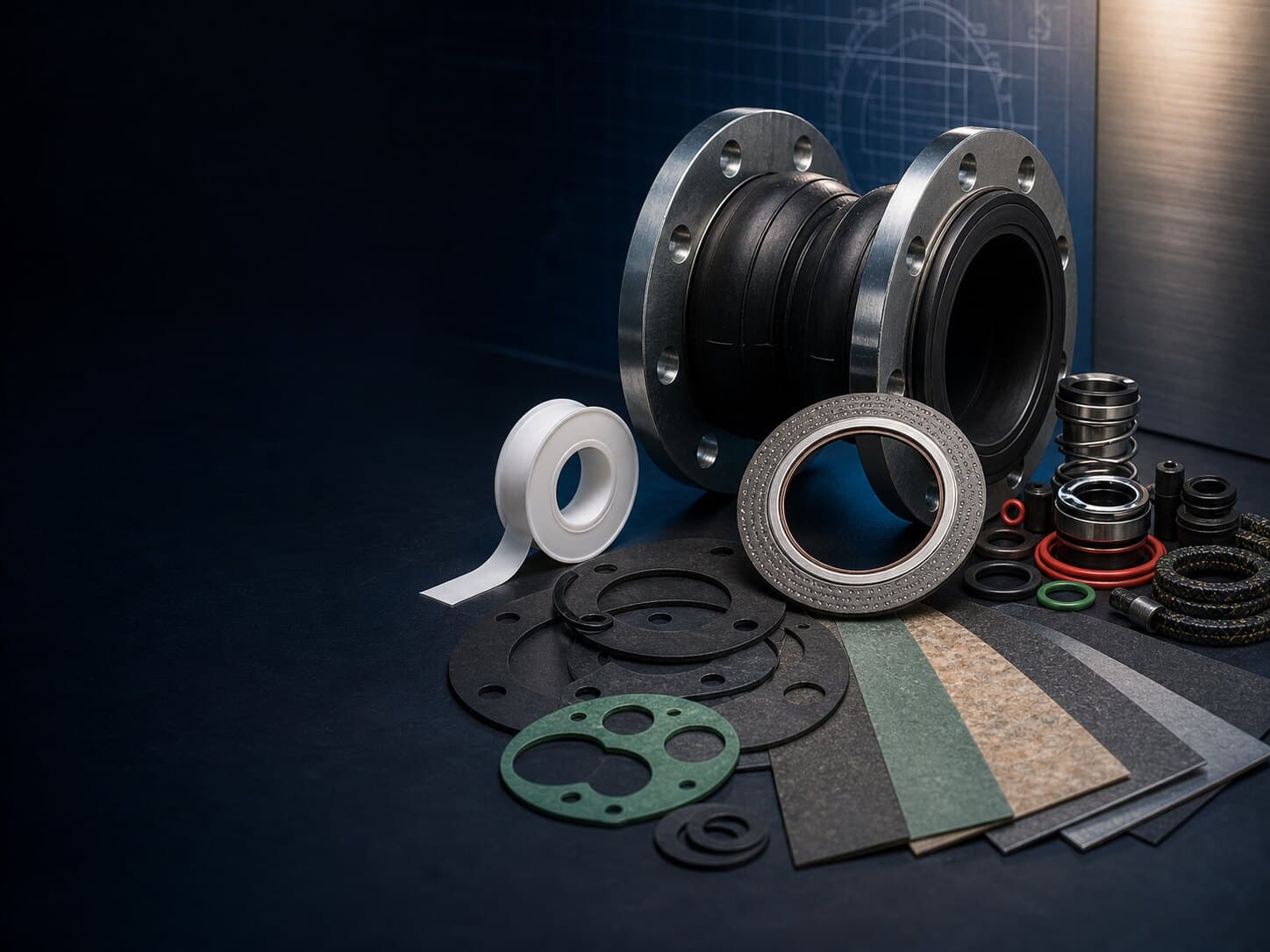
Range of SealGuard flange gaskets including spiral-wound, PTFE and compressed-fibre styles laid on a steel surface
Gaskets
Static face seals that hold the flangeSERIES 01 / 08
Capabilities

Performance envelope

A bolted flange is only as reliable as the gasket inside it. SealGuard gaskets are specified to the joint, not the catalogue: the right seating stress, recovery and chemical resistance for the exact flange class, medium and thermal cycle in front of you. Spiral-wound constructions soak up thermal movement and bolt relaxation, compressed-fibre and PTFE styles handle aggressive process chemistry, and every gasket ships with the standards traceability your inspectors expect — so the joint stays tight from hydrotest to turnaround.

Operating LimitsGaskets
Temperatureθ · °C
-200°C to +650°C
PressureP · bar
Up to 250 bar · ASME Class 2500 / PN250
Size RangeDN · ⌀
DN15–DN600 · ASME Class 150–2500
MaterialsMAT
316L SS, flexible graphite, PTFE/ePTFE, aramid fibre, EPDM / FKM
Product Range05 LINES

Gaskets lines

Browse the gaskets range, compare the headline limits, and add candidates straight to your quote request.

316L stainless spiral-wound gasket with graphite filler and colour-coded outer centring ringResilient metal-wound flange seal

Spiral Wound Gaskets

A precision V-section winding of 316L stainless and flexible graphite that recovers under bolt load and thermal cycling for leak-free flanged joints.

Temp
-200°C to +650°C
Pressure
Up to 250 bar · PN250 / ASME Class 2500

Specs
Compressed aramid-fibre flange gasket with graphite anti-stick facingTough fibre jointing for service flanges

Compressed Fiber Gaskets

Aramid-fibre and NBR-bound compressed gaskets that deliver dependable, economical sealing on general process and utility flanges.

Temp
-50°C to +400°C
Pressure
Up to 120 bar · PN120
Specs
Asbestos-free compressed gasket cut to a standard flange patternSafe, certified asbestos replacement

Non-Asbestos Gaskets

High-performance non-asbestos gaskets engineered as a like-for-like upgrade from legacy asbestos jointing, with full compliance traceability.

Temp
-50°C to +450°C
Pressure
Up to 120 bar · PN120
Specs
EPDM rubber flange gasket cut to a water-flange bolt patternConformable low-pressure elastomer seal

Rubber Gaskets

Elastomer flange gaskets in NBR, EPDM, FKM and silicone that conform to imperfect faces for reliable low-to-medium-pressure sealing.

Temp
-50°C to +200°C (compound dependent)
Pressure
Up to 40 bar (compound & thickness dependent)
Specs
White virgin PTFE flange gasket alongside an expanded-PTFE envelope gasketUniversal chemical-resistant flange seal

PTFE Gaskets

Virgin, filled and expanded PTFE gaskets offering near-universal chemical resistance and high purity for the most aggressive flange duties.

Temp
-200°C to +260°C
Pressure
Up to 80 bar (filled / ePTFE)
Specs
Specification Guidance

Getting the spec right

Field-tested guidance from our engineers on specifying gaskets for demanding service.

  • Note 01

    Match gasket seating stress to the available bolt load and flange facing (RF, FF or RTJ) before selecting a style.

  • Note 02

    Use spiral-wound or kammprofile constructions where thermal cycling and bolt relaxation threaten joint integrity.

  • Note 03

    Specify PTFE or ePTFE fillers for strong acids, caustics and high-purity duties where graphite is unsuitable.

  • Note 04

    Confirm fire-safe certification (API 607 / 6FB) for hydrocarbon service flanges in classified areas.

Field Evidence

Proven where it matters

A reliability problem in the field, closed at the joint — and the numbers that followed.

Refinery process flanges sealed with spiral-wound gasketsCase Study
Petrochemical

Zero fugitive emissions across a crude unit's critical flanges

01
Challenge

A coastal refinery was failing fugitive-emission audits on high-temperature crude and vacuum-tower flanges, with repeated re-torques and unplanned isolation eating into availability. Thermal cycling was relaxing the incumbent sheet gaskets and opening leak paths on Class 600 joints.

02
Solution

We re-specified the worst-offending joints with 316L spiral-wound gaskets using a flexible-graphite filler and inner/outer rings, matched to each flange's ASME B16.20 geometry. Every joint shipped with a torque sequence, material certification and an assembly checklist for the turnaround crew.

03
Result

The unit came back online and held leak-tight through the next two monitoring campaigns. Twenty-four months later the refinery has recorded zero reportable fugitive emissions on the upgraded joints and eliminated the re-torque cycle entirely.

0
Recordable leaks, 24 months
100%
Audit pass on monitored joints
0
Unplanned re-torques required
Let’s specify it

Engineer out your next leak.

Send us your service conditions — media, temperature, pressure and motion — and our engineers will specify the seal that holds the line.